

2026 Best LED Spotlights for Global Buyers?
Choosing the 2026 best Led Spotlights requires more than comparing brightness or price. Global buyers now examine beam control, color accuracy, thermal performance, and long-term reliability. The U.S. Department of Energy’s solid-state lighting research shows that LED efficacy has improved dramatically, while the International Energy Agency identifies lighting efficiency as an important pathway for reducing electricity demand. These findings support a practical conclusion: a bright product is not always an efficient product.
Performance matters in real spaces. A retail spotlight may need a narrow 15-degree beam, while a hotel corridor may require a softer 36-degree spread. High-quality models should provide stable output, accurate CRI ratings, low flicker, and suitable IP protection. Buyers should also check LM-79 photometric reports, warranty terms, driver quality, and regional voltage compatibility. Small details matter.
Richard Kelly, a respected pioneer of architectural lighting, said, “Light is the key to all visual perception.” His observation remains relevant for modern Led Spotlights. Good illumination should reveal texture, guide movement, and support comfort without creating harsh glare. However, product data can be confusing. Manufacturer claims are not always directly comparable, and some market forecasts use different definitions. That weakness deserves attention.
This guide compares leading 2026 options through measurable specifications, field-use experience, and global purchasing considerations. It also considers maintenance access, shipping durability, certifications, and installation conditions. The strongest choice may not be the most powerful model. It may be the one that performs consistently, wastes less energy, and still looks natural after years of use.
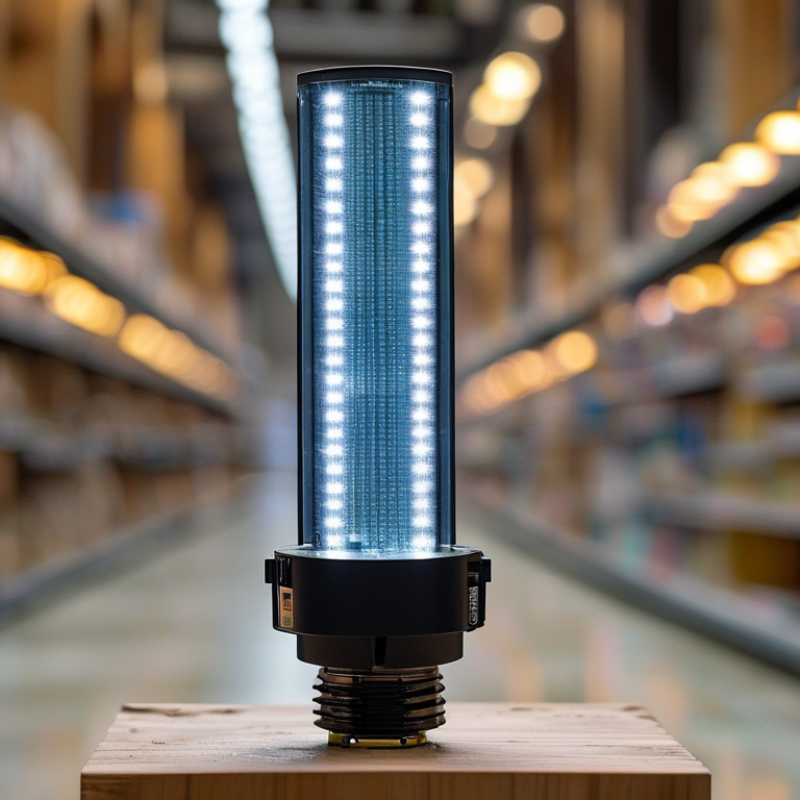
LED Spotlight Fundamentals: 80–200 lm/W, Beam Angles, CRI, and CCT
For global buyers, LED spotlight performance starts with efficacy, not wattage. Lumens per watt, or lm/W, measures delivered light against electrical input. The U.S. Department of Energy’s 2024 Solid-State Lighting R&D Opportunities report identifies higher efficacy as a continuing industry priority. In commercial products, 80–200 lm/W is a useful comparison range, but optical losses can reduce fixture output. Ask for tested system efficacy, not only LED-chip figures.
Beam angle controls how a room feels. A 15° beam can place a sharp pool on artwork, while 24°–36° suits shelves and retail displays. Wider beams reduce contrast and usually improve coverage. Photometric files should confirm distribution at the actual mounting height. I have seen narrow beams specified beautifully, then installed too close to walls. The result looked harsh.
CRI describes color fidelity, but average CRI alone is incomplete. The U.S. Department of Energy’s CALiPER research showed that color quality depends on several measures, including saturated-color rendering. For merchandise, choose CRI 90 or higher and review R9 performance. CCT changes the visual mood: 2700K feels warm, 3000K remains comfortable, and 4000K appears cleaner. The International Energy Agency’s Energy Efficiency 2023 report also emphasizes efficient lighting’s role in reducing electricity demand. Yet CCT labels can vary between suppliers, so request tolerances, test reports, and samples before large-scale purchasing.
2026 Best LED Spotlights for Global Buyers? - LED Spotlight Fundamentals: 80–200 lm/W, Beam Angles, CRI, and CCT
| Evaluation Dimension | Recommended Range / Specification | Typical Use | Buyer Considerations |
|---|---|---|---|
| LED system efficacy | 80–120 lm/W: standard; 120–160 lm/W: efficient; 160–200 lm/W: high-efficiency designs | General indoor and outdoor illumination | Confirm whether the figure refers to LED-chip output or complete-luminaire output. Driver, optics, temperature, and housing losses reduce delivered lumens. |
| Power and approximate output | 10 W: approximately 800–2,000 lm; 20 W: 1,600–4,000 lm; 30 W: 2,400–6,000 lm; 50 W: 4,000–10,000 lm | Accent lighting, retail areas, halls, façades, and landscape lighting | Values are indicative ranges based on approximately 80–200 lm/W. Compare tested luminaire lumens rather than wattage alone. |
| Beam angle | 10°–20° narrow; 24°–36° medium; 40°–60° wide; 60°–120° very wide | Narrow beams for objects; medium beams for shelves; wide beams for rooms and pathways | A narrow beam creates higher center illuminance but can produce glare and visible hotspots. Beam angle should match mounting height and target distance. |
| Color rendering index (CRI) | CRI 80+ for general lighting; CRI 90+ for retail, hospitality, artwork, food, and residential spaces | Accurate appearance of products, finishes, skin tones, and materials | Ask for the full test report and, where color quality matters, check R9 performance instead of relying on the general CRI number alone. |
| Correlated color temperature (CCT) | 2,700–3,000 K: warm white; 3,500–4,100 K: neutral white; 5,000–6,500 K: cool or daylight white | Warm tones for hospitality and homes; neutral tones for offices and retail; cool tones for work areas and security applications | CCT is not the same as brightness or color accuracy. Specify the permitted tolerance, commonly expressed as a MacAdam step or SDCM value. |
| Glare control | Deep reflector, shielding ring, louver, or diffuser; select optics according to viewing direction | Retail displays, galleries, offices, hospitality venues, and public areas | Check UGR information for indoor projects and review the photometric file. A higher lumen rating does not automatically mean better visual comfort. |
| Ingress protection | IP20 for dry interiors; IP44 for splash-prone areas; IP65 or higher for dust and water-jet exposure | Indoor, semi-outdoor, façade, garden, and industrial applications | IP ratings describe protection against solids and water, not impact resistance, corrosion resistance, or suitability for permanent underwater use. |
| Input voltage and frequency | 100–240 V AC, 50/60 Hz for broad international compatibility; local-voltage versions may also be available | Global commercial, residential, and project installations | Verify regional electrical requirements, surge conditions, earthing, plug or wiring format, and required conformity documentation before purchase. |
| Dimming and controls | Non-dimmable; phase-cut; 0–10 V; DALI; or wireless control, depending on the driver | Energy-managed offices, retail stores, hotels, galleries, and smart buildings | The spotlight, driver, dimmer, and control system must be compatible. Confirm minimum dimming level, startup behavior, and flicker performance. |
| Flicker performance | Prefer products with documented low flicker and tested flicker percentage or modulation metrics | Workplaces, schools, broadcast environments, sports facilities, and high-speed camera areas | Marketing terms such as “flicker-free” should be supported by test data under both full-power and dimmed conditions. |
| Thermal management | Aluminum heat sink or equivalent thermal path; performance should be specified at the intended ambient temperature | Continuous-use commercial, industrial, and outdoor installations | High operating temperature can reduce light output and service life. Review ambient-temperature limits, thermal test data, and installation clearances. |
| Lifetime and warranty evaluation | Look for an L70 rating, commonly 50,000 hours or more, together with a clearly defined warranty | Projects requiring predictable maintenance intervals | L70 indicates the time until light output is expected to reach 70% of its initial value under stated conditions; it is not a guarantee that every unit will operate for that duration. |
Related Posts
-
2026 How to Choose LED Street Lights for Global Buyers?
-
The Ultimate Checklist for Sourcing the Best LED Products Worldwide
-
2026 Top Led Exterior Lighting Trends for Global Buyers?
-
Discover the Benefits of Upgrading to a Smart Led Lighting System for Your Home
-
Top Innovations for Maximizing Impact with Led Stage Light Solutions
-
Chinese Manufacturing Thrives with Best Exterior Downlight Amidst US China Tariff Challenges