

Choosing among today’s Sewer Cameras is not simply a matter of buying the highest-resolution model. Global buyers face different pipe sizes, access conditions, budgets, training levels, and service expectations. A compact push camera may suit residential drains, while a crawler system may better serve municipal networks and industrial pipelines. Lateral-launch cameras add another option when inspectors must examine connected branch lines.
“The camera should match the inspection task, not the sales brochure,” says Matt Sutton, a sewer inspection technology specialist at Envirosight. That principle remains practical. A sharp image means little if the cable cannot reach the blockage. A powerful crawler also becomes inefficient in narrow pipes or difficult access points.
Small details matter. Check camera-head diameter, cable length, self-leveling performance, lighting strength, sonde compatibility, recording formats, and monitor visibility under sunlight. Consider wheel sets, crawler traction, waterproof ratings, and replacement-part availability. These features affect daily work more than impressive marketing claims.
It sounds straightforward. It is not.
Buyers should compare push-rod, tractor, pan-and-tilt, lateral-launch, and robotic Sewer Cameras against real inspection conditions. A camera that performs well in a clean test pipe may struggle with grease, standing water, roots, or irregular joints. That gap deserves honest attention.
This guide examines the leading Sewer Cameras for 2026. It focuses on practical use, image quality, operator control, maintenance, and total ownership value. Product rankings can never fit every market perfectly. Local support, technician skill, and reliable training may matter just as much as hardware. The best choice is the one that produces usable evidence repeatedly, safely, and at a reasonable long-term cost.
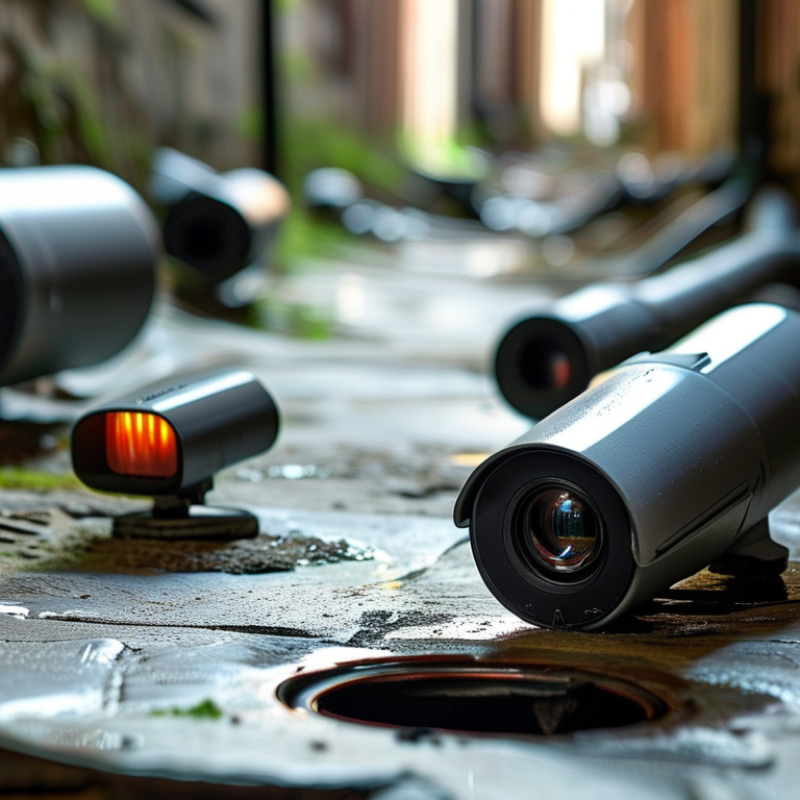
Sewer cameras turn hidden pipe conditions into visible evidence. A push camera suits small, short lines and gives operators fast visual access. Tractor cameras travel farther through larger mains. Pan-and-tilt systems inspect junctions, laterals, and difficult connections. Core components include a waterproof camera head, LED lighting, flexible cable, reel, monitor, and locating sonde. The sonde helps crews mark a defect’s position above ground.
Inspection work is practical, not merely visual. Operators look for root intrusion, cracks, displaced joints, grease, collapse, and standing water. They also record pipe diameter, material, distance, and defect location. The U.S. EPA’s 2022 Clean Watersheds Needs Survey reported 630.1 billion dollars in wastewater infrastructure needs. That figure shows why condition data matters before repair budgets are approved. ASCE’s 2025 Infrastructure Report Card rated U.S. wastewater infrastructure D+, reinforcing the pressure for better asset decisions. Still, a clear image is not always a complete diagnosis. Poor cleaning, water flow, or camera centering can hide serious damage.
Tips: Clean the line before filming. Calibrate the distance counter. Record continuous footage, not only defects. Compare images with standardized coding practices, such as those described by NASSCO’s PACP framework. Leave room for doubt; one inspection can miss defects behind sediment or water. Reinspection is sometimes the more professional choice.
Main Sewer Camera Types for Global Buyers in 2026
Global buyers usually choose among push-rod cameras, crawler cameras, and pan-and-tilt systems. Each type serves a different inspection condition. Push-rod cameras are compact and practical for household drains, branch lines, and short service pipes. A technician can carry one case into a basement or narrow access chamber. Their flexible cable follows bends well, but long runs can become difficult. Cable friction matters more than many buyers expect.
Crawler cameras suit larger municipal and industrial pipelines. Motorized wheels move the camera through longer sections, while strong lighting reveals cracks, root intrusion, displaced joints, and sediment. Some models include a distance counter and locating sonde. These features help crews mark defects above ground. However, crawlers need enough pipe space and a reasonably clear path. Muddy water can still reduce image quality.
Pan-and-tilt cameras provide a wider inspection view. The operator can rotate the lens and examine connections from several angles. They are useful for larger pipes, complex networks, and detailed condition surveys. Buyers should compare camera diameter, operating range, waterproof rating, cable length, battery endurance, and video storage format. Local service support also deserves attention. A low purchase price may become expensive when parts, training, or calibration are unavailable. No camera type wins every job. Even experienced teams sometimes choose the wrong access method. A small pre-inspection survey can prevent that mistake.
2026 Top Sewer Camera Types for Global Buyers? How Sewer Camera Designs Differ by Pipe Size and Access Method
Sewer camera selection begins with pipe diameter and entry conditions. For small residential lines, push-rod cameras usually pass through 50–150 mm pipes. Their flexible cable can enter through a cleanout, floor drain, or inspection opening. A compact self-leveling lens keeps the image upright, but sharp bends can still stop progress. It happens.
For 150–600 mm pipes, crawler cameras provide steadier movement and clearer distance measurements. Their wheels need enough traction on wet, silt-covered surfaces. Larger municipal pipes often require motorized crawlers with pan-and-tilt heads, powerful lighting, and long cable drums. Some systems enter through manholes, while others use lateral launch cameras from a mainline crawler. Access changes the design more than many buyers expect.
The U.S. EPA’s 2022 Clean Watersheds Needs Survey estimated $630.1 billion in wastewater infrastructure needs over 20 years. That figure reinforces the value of reliable condition data before repair budgets are assigned. Professional teams commonly align inspections with NASSCO coding practices or EN 13508-2 terminology, improving report consistency across countries. Buyers should verify camera diameter, minimum turning radius, cable length, lighting output, and IP protection. A high-resolution image is not enough if the camera cannot reach the defect. Price comparisons can also mislead when operators overlook training, calibration, and access equipment.
Choosing a sewer camera in 2026 starts with the pipe, not the screen. Push cameras suit short residential lines and narrow access points. They are simple. Very practical. For long, larger pipes, crawler systems offer steadier movement and stronger lighting. Pan-and-tilt cameras help inspect joints, cracks, and hidden connections from several angles. Image quality depends on more than resolution. A bright, adjustable light, a self-leveling lens, and clear color control matter when water, grease, or muddy walls reduce contrast. A sharp picture can still fail if glare hides a small fracture.
Reach depends on cable length, rod stiffness, and the number of bends. A long cable is not automatically useful. It may twist, buckle, or become difficult to retrieve. Check the camera head diameter against the smallest pipe, then consider the access distance. Durability deserves equal attention. Look for sealed connections, impact-resistant housing, corrosion-resistant materials, and a cable designed for repeated dragging. Battery life also matters during inspections in basements or roadside chambers. In field work, operators often discover that screens, connectors, and cable reels fail before the camera head. That detail is easy to miss. Even a strong unit needs cleaning after each job, and imperfect maintenance can shorten its working life. Reliable buyers compare sample footage, service records, and repair access instead of trusting specifications alone.
2026 Top Sewer Camera Types for Global Buyers
How to Select a Sewer Camera for Different Inspection Needs
Choosing a sewer camera starts with the pipe, not the screen. Measure the route, diameter, access points, and expected bends. For household drains, a compact push camera usually provides enough reach and flexibility. A small self-leveling camera can keep the image upright inside narrow, curved pipes. Clear lighting matters more than impressive resolution.
Long commercial lines require a stronger push cable, longer operating range, and reliable distance counting. A camera with a locating sonde helps technicians mark underground defects more accurately. For large municipal pipes, crawler systems may offer better stability and wider viewing angles. Select pan-and-tilt movement when joint offsets, cracks, or lateral connections need close examination.
Look for waterproof construction, replaceable cable sections, stable recording, and batteries suited to the workday. Check whether the camera handles grease, standing water, and root intrusion without losing image quality. Clean the lens after every inspection. Small details matter. A high-resolution image can still mislead when water reflects the LEDs. That mistake happens. Operators should record pipe direction, defect position, and inspection conditions. Verify the distance counter before serious work, because inaccurate footage can weaken an otherwise useful report. In practice, the most expensive system is not always the best fit. Match its reach, mobility, and maintenance needs to the inspection environment. Reconsider the choice after several jobs, since real pipe conditions often differ from planning notes.
| Camera Type | Typical Inspection Diameter | Typical Reach | Camera Head & Image | Best Inspection Uses | Main Advantages | Key Limitations | Recommended Buyer Profile |
|---|---|---|---|---|---|---|---|
| Basic Push-Rod Camera | Approximately 50–150 mm | About 20–60 m, depending on the reel | Small fixed camera head; color video; integrated LED lighting; usually 480p to 1080p | House drains, short laterals, small commercial lines, blockage checks and routine maintenance | Portable, comparatively low cost, quick to deploy and easy for one operator | Limited inspection distance; the rod can be difficult to advance through multiple bends or heavy deposits | Plumbers, drainage contractors, property maintenance teams and small municipalities |
| Professional Push-Rod Camera | Approximately 75–250 mm | About 60–120 m, depending on rod length and pipe conditions | Self-leveling or fixed head; high-intensity LEDs; digital recording; distance counter; optional sonde | Residential sewer surveys, service connections, pre-purchase inspections and defect documentation | Better image stability, longer reach and more reliable reporting than entry-level systems | Still depends on manual pushing; cannot reliably overcome severe collapses, roots or large offsets | Professional drainage companies and inspection contractors requiring repeatable reports |
| Self-Leveling Push Camera | Approximately 75–300 mm | About 50–120 m | Rotating or weighted head that keeps the image upright; adjustable LED lighting; HD recording | Detailed assessment of cracks, open joints, service connections, corrosion and pipe deformation | Easier defect interpretation and more consistent orientation in non-horizontal pipe sections | Higher purchase cost and a larger head may reduce access in very small or sharply curved drains | Surveyors and contractors producing condition-assessment reports |
| Small-Diameter Lateral Camera | Approximately 40–150 mm | About 20–80 m | Compact flexible camera head; strong close-range lighting; often includes a locating sonde | Kitchen and bathroom branches, narrow laterals, floor drains and difficult residential access points | Fits narrow openings and negotiates tighter bends than larger push systems | Shorter effective viewing distance and less suitable for large-diameter municipal mains | Residential service specialists and emergency blockage teams |
| Crawler Camera | Approximately 150–2,000 mm, subject to crawler configuration | Typically 100–500 m of cable | Motorized tractor with pan-and-tilt or rotating camera; powerful lighting; distance measurement; optional laser or sonar | Municipal gravity sewers, industrial lines, large culverts, long-distance condition surveys and acceptance inspections | Motorized travel, stable footage, accurate distance records and suitability for long or large pipelines | Higher capital cost, heavier transport equipment and reduced performance in deep water, heavy sediment or steep grades | Municipalities, utility operators, infrastructure contractors and industrial inspection providers |
| Pan-and-Tilt Crawler Camera | Approximately 200–2,000 mm | Typically 100–500 m | Remote pan, tilt and zoom; high-resolution camera; adjustable lighting; digital overlay and measurement tools | Comprehensive structural surveys, connection identification, manhole-to-manhole inspections and engineering assessments | Views multiple directions without repositioning the tractor; produces detailed and repeatable evidence | More complex operation and maintenance; usually requires trained personnel and a suitable access chamber | Large utility owners, engineering firms and advanced inspection contractors |
| Lateral Launch Camera | Main line commonly 200–1,500 mm; lateral branch commonly 75–250 mm | Mainline cable often 100–300 m; lateral deployment varies by system | Mainline crawler with a deployable satellite camera; steerable lateral head; distance and location recording | Inspecting connected property laterals from a main sewer without entering every property or access point | Covers mainline and branching pipes in one deployment; improves network mapping efficiency | Complex and expensive; lateral launch can be restricted by offsets, tight junctions, roots or heavy deposits | Utility owners and contractors conducting network-wide surveys |
| Manhole and Open-Structure Camera | Manholes, chambers, culverts and other accessible structures | Usually 5–30 m viewing distance, depending on lighting and structure size | Pole-mounted, tripod-mounted or pan-and-tilt camera; wide-angle lens; high-output lighting | Rapid visual checks of manholes, shafts, wet wells, culverts and chamber walls | Fast setup, broad field of view and reduced need to enter confined spaces | Does not replace a traveling pipe camera for long internal pipe inspections; image quality depends strongly on lighting and water clarity | Maintenance departments, municipalities and confined-space inspection teams |
| Sonar-Assisted Sewer Camera | Medium to large pipes, commonly 300–2,000 mm | Generally 100–500 m with a crawler or float platform | Camera combined with acoustic sonar to profile submerged or obscured pipe sections | Pipes with standing water, submerged defects, sediment depth measurement and partially inaccessible lines | Provides information where optical video is blocked by water or poor visibility | Higher cost and data-processing requirements; sonar interpretation requires trained operators | Large utilities, wastewater operators and specialist survey contractors |
TERMS OF USE - LEDOLUX
This site uses cookies in order to deliver services in accordance with Privacy Policy. You can use settings within your browser to control the cookies that are set on your computer – conditions of access or storage of cookies.
Your data controller will be LEDOLUX POLAND SP. ul. Innowacyjna 1; 36-060 Głogów Małopolski, which adapts the content of its website to your needs and analyses and examines them to improve it. More information.