

China has become a significant sourcing base for precision optical components used in medical imaging. The global endoscopy devices market was valued at approximately USD 30 billion in 2023, according to Grand View Research, with continued growth expected through 2030. Fortune Business Insights also identifies minimally invasive procedures, aging populations, and improved visualization technologies as major market drivers.
Within this expanding sector, Endoscope Lens performance directly affects image clarity, color accuracy, illumination, and procedural confidence. A lens may appear small, but its tolerances are demanding. Surface finish, coating uniformity, distortion control, and sterilization resistance can influence the final clinical image. These details matter when a surgeon views tissue through a narrow, curved instrument.
This guide introduces China’s top 10 Endoscope Lens manufacturers for global buyers. The selection considers manufacturing experience, optical design capability, quality systems, customization support, and export reliability. ISO 13485 certification, traceable inspection records, and compatibility testing deserve careful review before any purchase. Certifications alone are not enough.
MarketsandMarkets reports that demand is shifting toward high-definition, 4K, and specialized endoscopic imaging systems. This shift increases pressure on suppliers to deliver stable optical performance at scale. However, public rankings can be incomplete. Some manufacturers disclose limited production data, while others serve private-label customers quietly. That limitation should not be ignored.
A qualified supplier should provide measurable specifications, sample evaluation, coating information, and realistic lead times. Buyers should also verify integration performance inside the complete endoscope, not only the loose lens. The strongest choice is rarely the cheapest one. It is the supplier that combines repeatable quality, responsive engineering, and credible evidence.
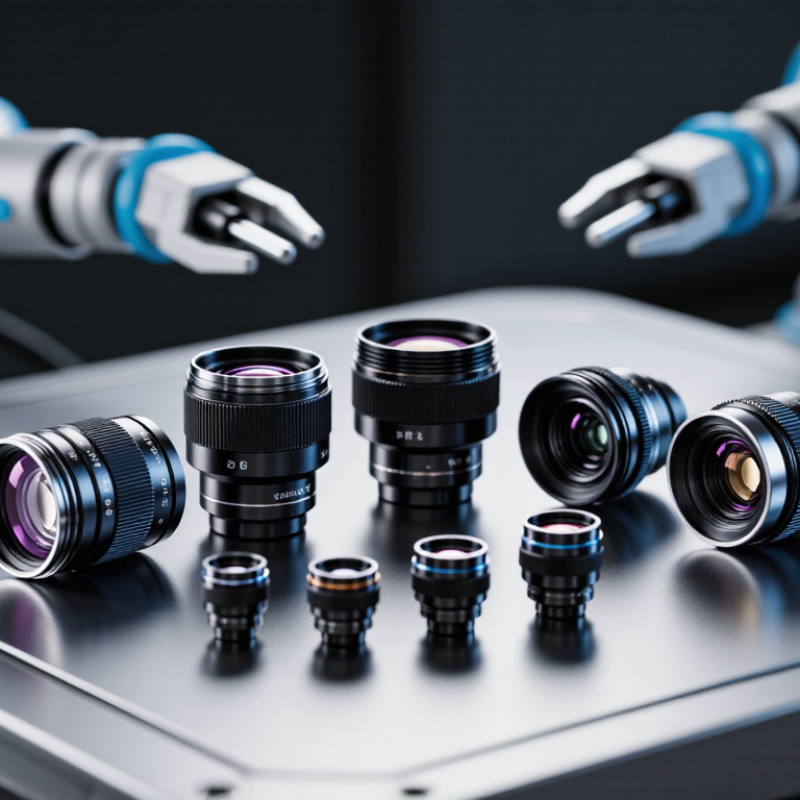
An endoscope lens is the optical element that captures images inside narrow, hard-to-reach spaces. It usually sits at the distal tip, where light, moisture, pressure, and repeated handling can affect performance. The lens gathers light and directs it toward the image sensor or viewing system. Its shape influences field of view, image brightness, distortion, and edge clarity. Small part, major effect.
In practical inspections, lens quality becomes visible through fine details. A reliable lens should show clear tissue patterns, surface cracks, weld seams, or internal corrosion without excessive blur. Optical engineers commonly check resolution, focal length, distortion, coating performance, and alignment tolerance. These measurements matter because a sharp center is not enough. The edges must remain useful too. Clean assembly also matters, since dust near the optical path can appear as a permanent dark spot.
Material choice depends on the endoscope’s purpose. Medical applications may require compatibility with cleaning and sterilization processes. Industrial systems may face oil, vibration, heat, or sudden temperature changes. Buyers should request test data, dimensional drawings, sample evaluation, and traceable quality records. A low price can hide unstable coating quality or inconsistent assembly. No lens is perfect. Even experienced teams can overlook glare under real operating lights. Bench testing should therefore include practical viewing conditions, not only laboratory charts. Reliability grows when optical data and hands-on inspection agree.
Endoscope lenses are precision optical components that capture and transmit images through a narrow instrument. Their field of view affects how much anatomy can be observed at once, while optical clarity, distortion control, light transmission, and durability directly influence diagnostic and surgical performance.
The chart shows representative field-of-view ranges commonly associated with major endoscope categories. Actual specifications vary by optical design, diameter, viewing angle, and intended clinical application. The data does not rank companies or brands.
Choosing among China’s top endoscope lens manufacturers requires more than comparing catalog prices. A reliable evaluation begins with optical evidence. Ask for measured resolution, distortion, field of view, and coating performance at working wavelengths. Request test reports from calibrated equipment, not only product brochures. Small details matter.
Examine manufacturing experience through sample consistency. Order several lenses from different production batches. Compare edge sharpness, color transmission, scratches, and fit under magnification. A capable supplier should explain its polishing, centering, bonding, and inspection processes clearly. It should also provide traceability for materials and operators. Factory audits can reveal whether quality control is systematic or improvised. Documentation must be current and verifiable.
Compatibility deserves equal attention. Confirm the lens design against the intended diameter, illumination path, sterilization method, temperature range, and imaging sensor. Ask how the supplier manages design changes and nonconforming parts. Certifications can support credibility, but they do not replace technical testing. Speak with engineers, not only sales representatives. Their answers often expose practical knowledge.
No evaluation is perfect. I have seen attractive samples fail after repeated cleaning cycles. That mistake is costly. A stronger assessment combines laboratory data, production samples, site evidence, and service records. Check response times when specifications change or defects appear. A dependable manufacturer will discuss limitations openly, even when the answer is inconvenient. That honesty is valuable for global buyers managing long-term medical imaging projects.
China’s top 10 endoscope lens manufacturers serve medical, industrial, and research equipment markets. Their capabilities differ widely. Some focus on miniature lenses, while others support complete optical assemblies. A reliable manufacturer should explain numerical aperture, field of view, distortion, and working distance clearly. These details affect image brightness and surgical visibility. They should also provide coating information, inspection records, and dimensional tolerances. In practice, a lens may look excellent on paper but perform poorly after repeated sterilization. That gap deserves attention.
Experienced buyers usually request samples before approving large orders. Check edge clarity, color consistency, glare, and image stability under the intended light source. Ask how suppliers control centering, surface scratches, and adhesive curing. Quality systems such as ISO 13485 can strengthen confidence, but certification alone is not enough. Factory communication matters too. Slow answers often create avoidable delays. Still, even careful evaluations can miss small assembly issues. I have learned that real testing is less impressive than a polished brochure.
Tips: Share drawings, camera specifications, sterilization conditions, and target quantities early. Request a sample inspection report with measurable results. Compare at least three suppliers using the same test method. Keep tolerances realistic; tighter requirements can increase cost and lead time. Ask for production photographs or an audit when possible. Do not judge solely by price. A cheaper lens may require more calibration, replacement, or engineering work later.
When comparing China’s top 10 endoscope lens manufacturers, global buyers should examine measurable performance, not attractive samples. Check optical resolution, field of view, distortion, chromatic aberration, and edge clarity. MTF data at different image heights reveals more than a simple product photograph. A lens may look sharp in the center but lose detail near the edges. That matters during narrow-cavity inspection.
Sensor matching is equally important. Confirm compatibility with the camera’s pixel size, wavelength range, and working distance. Ask for illumination uniformity tests and coating specifications. Anti-reflective coatings should reduce glare without creating color shifts. Mechanical details also deserve attention. Thread accuracy, lens centering, sealing, and articulation tolerance affect assembly reliability. Small errors become visible on a monitor.
Quality evidence should be traceable. Request inspection records, batch numbers, calibration methods, and sample retention policies. For medical applications, review the manufacturer’s ISO 13485 quality system, ISO 14971 risk controls, and relevant IEC or ISO endoscope requirements. Do not assume a certificate covers every lens model. Verify its scope and validity. I have seen polished samples hide inconsistent production results. Independent testing is safer. Compare at least three batches, including low-light images and repeated sterilization tests. Some specifications still need clearer definitions. That uncertainty should remain part of the purchasing decision.
| Comparison Profile | Typical Product Focus | Optical Configuration | Typical Field of View | Typical Working Distance | Typical Distal Diameter Range | Resolution and Image Quality | Key Lens Technologies | Coating and Light Transmission | Common Application Fit | Quality Standards to Verify | Buyer Evaluation Priority |
|---|---|---|---|---|---|---|---|---|---|---|---|
| Manufacturer Profile 01 | High-volume rigid endoscope optical assemblies | Rod-lens or relay-lens construction; straight-view and angled-view options | 0° to 30° standard; selected designs up to 70° | 2 mm to 100 mm, depending on optical design | 2.7 mm to 10 mm | High-contrast image transmission suitable for HD camera couplers | Precision centering, multi-element relay systems, low-distortion optical layouts | Broadband anti-reflection coating; typical visible-band transmission target above 85% | Arthroscopy, laparoscopy, ENT, gynecology and general surgery | ISO 13485; ISO 9001; ISO 8600 series; IEC 60601-1 for applicable assemblies | Optical consistency and production capacity |
| Manufacturer Profile 02 | Miniature rigid endoscope lenses for minimally invasive instruments | Compact multi-lens objective with miniature relay optics | 70° to 120° wide-angle configurations | 1.5 mm to 20 mm | 1.0 mm to 4.0 mm | Designed for limited-space imaging with controlled edge distortion | Micro-optical assembly, tight spacing control, precision barrel machining | Anti-reflection coating optimized for 400 nm to 700 nm visible light | Dental, ENT, veterinary and small-channel inspection devices | ISO 13485 certification scope; dimensional inspection records; biocompatibility documentation for patient-contacting parts | Miniaturization and yield rate |
| Manufacturer Profile 03 | High-definition camera-compatible endoscope optical modules | Objective lens with image-circle matching for 1/3-inch to 1-inch sensors | 70° to 140° diagonal, depending on sensor format | 5 mm to 80 mm | 3 mm to 12 mm | Supports HD and selected 4K imaging systems when matched with an appropriate sensor | Low-distortion design, chromatic-aberration correction and sensor-plane optimization | Multi-layer broadband coating; glare and ghost-image reduction required | Flexible and rigid video endoscopes, industrial inspection cameras | ISO 13485; IEC 60601-1 where integrated into medical electrical equipment; optical MTF test reports | Sensor compatibility and MTF data |
| Manufacturer Profile 04 | Autoclavable surgical endoscope optical systems | Hermetically sealed rod-lens system with stainless-steel housing | 0°, 30°, 45° and 70° viewing directions | 10 mm to 150 mm | 4 mm to 10 mm | Stable image quality after repeated thermal sterilization cycles | Laser-welded or sealed housing, moisture control, high-temperature adhesive selection | Durable anti-reflection coating with resistance to cleaning and sterilization processes | Laparoscopy, arthroscopy, urology and reusable surgical scopes | ISO 13485; ISO 17664 processing information; validated sterilization-cycle compatibility; leak testing | Sterilization durability and sealing |
| Manufacturer Profile 05 | Flexible endoscope distal optical windows and objective lenses | Small objective lens with protective distal window and custom optical stack | 80° to 140° wide-angle designs | 1 mm to 15 mm | 2.0 mm to 6.5 mm | Optimized for close-focus imaging and low-light operation | Wide-angle correction, anti-fog structure, miniature lens bonding and edge sealing | Hard-coated sapphire or optical-glass window options; anti-reflection treatment | Bronchoscopy, gastrointestinal, urology and industrial borescopes | ISO 13485; ISO 8600-1 and relevant endoscope performance tests; cleaning and chemical-resistance data | Distal protection and chemical resistance |
| Manufacturer Profile 06 | Customized endoscope optical assemblies for OEM projects | Customer-specific objective, relay and eyepiece configurations | 30° to 140° based on the application specification | 2 mm to 200 mm | 1.5 mm to 14 mm | Performance defined by application-specific resolution, distortion and illumination targets | Optical simulation, tolerance analysis, rapid prototyping and custom mechanical interfaces | Coating selection based on wavelength, illumination source and sterilization method | Medical devices, aerospace inspection, automotive inspection and research equipment | ISO 13485 or ISO 9001; design-control records; change-control procedure; first-article inspection | Engineering support and customization speed |
| Manufacturer Profile 07 | Industrial borescope and machine-vision endoscope lenses | Compact objective and relay optics for inspection cameras | 60° to 120° | 3 mm to infinity, depending on the lens design | 2 mm to 8 mm | Emphasis on edge-to-edge sharpness, distortion control and repeatable focus | Low-distortion optics, ruggedized barrels, vibration-resistant assembly | Broadband coating options for visible and near-infrared applications | Engine inspection, casting inspection, pipelines, electronics and machinery | ISO 9001; RoHS and REACH declarations; environmental and vibration test reports | Ruggedness and inspection repeatability |
| Manufacturer Profile 08 | LED-integrated endoscope optical modules | Objective lens combined with peripheral or coaxial illumination structure | 70° to 120° | 2 mm to 50 mm | 2.5 mm to 8 mm | Designed to reduce uneven illumination, flare and shadowing | Light-guide integration, illumination uniformity control and thermal management | Anti-reflection coating matched with white LED spectral output | Portable medical scopes, dental cameras and compact inspection instruments | ISO 13485 where used in medical devices; IEC 60601-1; IEC 60601-1-2; photobiological safety assessment where applicable | Illumination uniformity and thermal safety |
| Manufacturer Profile 09 | Specialized endoscope lenses for narrow channels and angled access | Angled objective, prism-based or custom folded optical path | 30°, 45°, 70° and application-specific viewing directions | 1 mm to 40 mm | 1.8 mm to 5 mm | Prioritizes usable image area and optical alignment in restricted geometries | Prism alignment, compact folded paths, high-precision angular positioning | High-durability coating and sealed optical interfaces | ENT, dental, neuroendoscopy, catheter-based imaging and technical inspection | ISO 13485; ISO 8600 series; angular accuracy; field-of-view; leakage and pressure testing | Angular accuracy and alignment stability |
| Manufacturer Profile 10 | Cost-optimized endoscope lens assemblies for volume programs | Standardized objective and relay-lens platforms with configurable interfaces | 0° to 120° | 5 mm to 100 mm | 2.7 mm to 10 mm | Suitable for standard-definition and HD systems after system-level validation | Platform-based optical design, automated inspection and controlled assembly processes | Standard visible-spectrum anti-reflection coating; optional custom coating | OEM replacement parts, educational devices, veterinary scopes and industrial cameras | ISO 9001 or ISO 13485 according to intended use; incoming-material inspection; batch traceability; RoHS and REACH | Total cost, lead time and batch stability |
Selecting among China’s top endoscope lens manufacturers requires more than comparing catalog prices. Global buyers should examine optical performance under real clinical conditions. Ask for measured resolution, field of view, working distance, distortion, and light transmission. A lens may look sharp on a test chart but lose contrast inside a narrow, wet channel.
Request samples before signing a large order. Test them with your own camera module, light source, and image processor. Check edge clarity, color consistency, coating durability, and fogging after repeated cleaning cycles. Small details matter. A one-degree viewing error can affect positioning during a procedure. Suppliers should provide inspection records, material details, calibration methods, and batch traceability. Clear documentation shows professional control, not just confident sales language.
Factory communication also deserves careful review. Can the engineering team explain tolerance limits in plain English? Do they respond with drawings, test data, and corrective actions? Ask about lead times, replacement handling, packaging, and change-control procedures. A reliable supplier should welcome an on-site or remote audit. Some buyers focus too heavily on unit cost. That is a mistake. I have seen low-priced samples create higher integration costs later. Still, no supplier is perfect. Test assumptions, record failures, and leave room for improvement. A practical scorecard can compare quality, technical support, delivery stability, and compliance evidence before any purchase decision.
TERMS OF USE - LEDOLUX
This site uses cookies in order to deliver services in accordance with Privacy Policy. You can use settings within your browser to control the cookies that are set on your computer – conditions of access or storage of cookies.
Your data controller will be LEDOLUX POLAND SP. ul. Innowacyjna 1; 36-060 Głogów Małopolski, which adapts the content of its website to your needs and analyses and examines them to improve it. More information.