

How to Choose the Best Water Based Gel Coating Machine

Selecting the right Water-Based Gel Coating Machine is a production decision, not merely an equipment purchase. Water-based formulations are gaining attention because manufacturers seek lower volatile organic compound emissions and safer workplace conditions. Grand View Research valued the global water-based coatings market at approximately USD 79.7 billion in 2023. It also forecasts continued growth through 2030. These figures indicate strong demand, but they do not guarantee that every machine suits every gel formula.

Performance begins with the coating material. Check viscosity, solids content, shear sensitivity, and drying behavior before comparing machine prices. A thick gel may require a positive-displacement pump and precise metering control. A fragile formulation may suffer from excessive shear. The wrong setup can create streaks, pinholes, uneven edges, or wasted material. These defects often appear only after extended production. That is easy to underestimate.

EPA guidance emphasizes controlling VOC emissions through formulation, application, and process management. Therefore, review the machine’s enclosure, ventilation needs, cleaning method, and waste handling. Ask suppliers for coating trials using your actual substrate and production speed. Measure coat weight, thickness variation, transfer efficiency, and cleaning time. Request maintenance records and operator training details. Reliable suppliers should explain limitations clearly.

Automation can improve repeatability, yet excessive complexity may increase downtime. That trade-off deserves honest review. A practical evaluation should include pump stability, nozzle access, PLC usability, spare-part availability, and total operating cost. MarketsandMarkets identifies automation and process efficiency as important trends across industrial coating equipment. Still, a glossy specification sheet cannot replace a controlled trial. The best choice is the machine that delivers stable results, manageable maintenance, and compliant operation under real factory conditions.
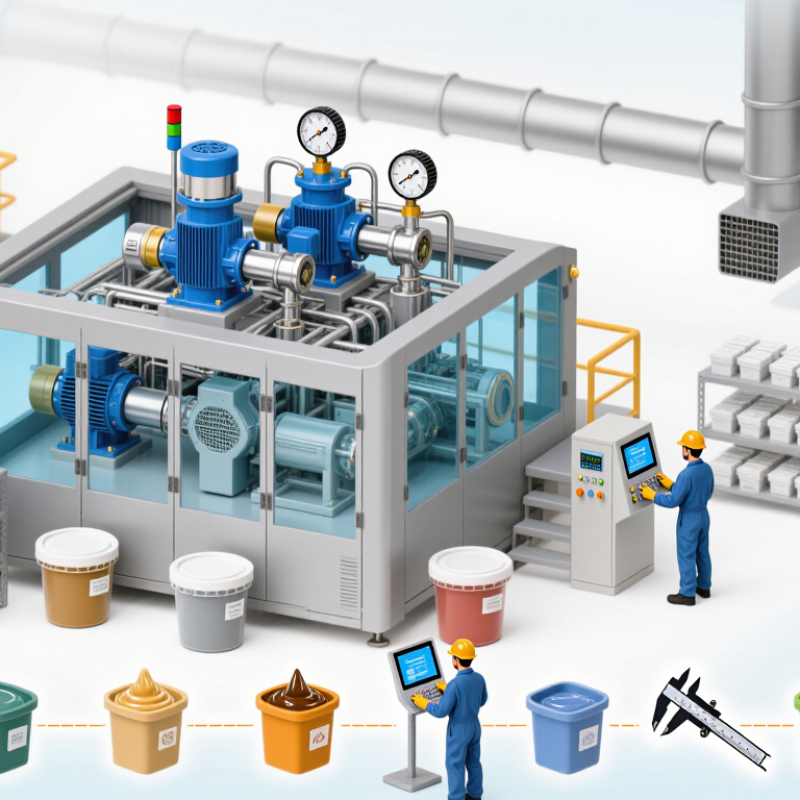
How to Choose the Best Water Based Gel Coating Machine

What Is a Water-Based Gel Coating Machine?

A water-based gel coating machine is industrial equipment designed to spread gel evenly across materials such as film, paper, fabric, or prepared panels. It uses a metering system, coating head, pump, and drying section. The pump moves the gel from a tank, while the coating head controls thickness across the working width. Water-based formulas usually need controlled airflow and temperature. Otherwise, the surface may remain wet or develop uneven marks.

Choosing the best machine depends on the gel’s viscosity, required coating thickness, material width, and production speed. A machine for thin protective layers may not suit a dense decorative gel. Check whether the pump provides stable flow at low speed. Confirm that the coating head can be cleaned without hidden residue. Operators should also examine temperature controls, emergency stops, maintenance access, and measurement accuracy. These details affect product consistency more than a high advertised speed.

In practical production, test samples reveal problems that specifications may hide. Watch for edge buildup, pinholes, bubbles, and changes after drying. A perfect setting rarely exists. Small adjustments are normal, but relying only on guesswork is poor practice. Record each trial, including gel temperature, line speed, pressure, and drying time. This record helps technicians identify repeatable settings and reject unreliable results. A suitable machine should support careful control, not force operators to compensate for unstable equipment.

How Water-Based Gel Coating Machines Work

How Water-Based Gel Coating Machines Work

Choosing a water-based gel coating machine starts with understanding its working path. The process usually begins in a stainless-steel tank, where the coating is mixed gently. A controlled pump then moves the gel toward a spray head, slot die, or coating roller. Each method creates a different surface pattern and thickness.

The machine’s metering system controls how much gel reaches the material. Sensors may monitor pressure, temperature, and coating speed during production. A heated airflow section removes water from the wet layer without overheating the substrate. This matters when coating paper, fabric, film, or other heat-sensitive materials. In production trials, I check the coating weight at several points across the web. A glossy center with dry edges often signals poor distribution.

Viscosity is another practical concern. If the gel is too thick, the pump may pulse and create visible bands. If it is too thin, the coating can spread unevenly or penetrate the substrate.

That assumption can fail.

A stable laboratory sample may behave differently after several hours in a production tank. Operators should test continuous circulation, cleaning access, and filter performance before selecting equipment. Short trials reveal problems. Look for adjustable speed, accurate metering, simple temperature control, and surfaces that resist residue buildup. These details often matter more than a machine’s advertised maximum output.

Key Features to Compare Before Buying

How to Choose the Best Water Based Gel Coating Machine

Key Features to Compare Before Buying

A reliable machine should control coating thickness with steady accuracy. Compare its pump system, nozzle design, and adjustable application speed. During testing, watch the coating edge closely. Uneven edges often reveal unstable pressure. A machine handling different gel viscosities offers better production flexibility. Check whether the tank includes gentle agitation. Strong mixing can create bubbles. Small bubbles may damage the final surface.

Temperature control also matters. Water-based gels can react badly to cold workshops or sudden heat changes. Look for clear temperature readings and simple adjustment controls. The material path should use corrosion-resistant components. Ask about cleaning access before purchasing. Narrow tubes can trap dried gel and waste several hours. I would request a live demonstration with your actual coating material. Factory test samples may look perfect, but real production rarely behaves so neatly.

Operator safety and maintenance deserve equal attention. Guards, emergency stops, and low-noise operation reduce daily risks. A readable control panel helps new workers avoid costly settings errors. Compare spare-part availability, service training, and technical documentation. Vague manuals are a warning sign. Energy use should be measured during normal operation, not only in standby mode. A compact machine may save floor space but limit future capacity. That trade-off is easy to underestimate. Record trial results for thickness, speed, cleaning time, and material waste before making the final decision.

How to Match Machine Specifications with Production Needs

Choosing the best water-based gel coating machine starts with production data, not a catalog photograph. Grand View Research reported that the global water-based coatings market could grow at roughly 5% annually through 2030. That growth increases pressure on manufacturers to improve consistency, speed, and material efficiency. Measure your gel viscosity, coating width, target weight, and daily output first. A machine designed for 20-meter-per-minute production may waste energy and material in a small workshop.

Match the pump and applicator to the gel’s behavior. High-viscosity formulas often need a progressive-cavity or lobe pump, with gentle circulation to reduce shear and air entrapment. Select nozzle width from the actual web size, not the maximum brochure value. For example, a 600-millimeter coating path needs stable edge control, not simply a larger pump. The drying tunnel also matters. The U.S. Environmental Protection Agency identifies water-based coatings as a major approach for reducing solvent emissions, but water still requires controlled evaporation. Insufficient airflow leaves a soft surface; excessive heat can cause skinning.

Run a pilot trial.

Record pressure, temperature, line speed, and wet-film weight every ten minutes. The first setting is rarely perfect. A spreadsheet cannot predict every foaming event. I would test three speeds and two drying profiles before approving a machine. MarketsandMarkets’ 2024 water-based coatings report also highlights continued demand for efficient, lower-emission coating processes. Therefore, prioritize adjustable controls, washable contact parts, and clear maintenance access. A cheaper machine can become expensive when cleaning takes half a shift.

How to Choose the Best Water Based Gel Coating Machine - How to Match Machine Specifications with Production Needs

Production Requirement Typical Requirement Recommended Machine Specification Why It Matters
Laboratory testing and product development Small samples; frequent formula changes; limited daily output 5–20 L hopper; 0.5–5 m/min line speed; 100–300 mm coating width; adjustable gap or metering roller A compact and flexible system reduces material waste and simplifies cleaning between trials.
Small-batch commercial production Several batches per shift; moderate coating consistency 20–80 L hopper; 5–15 m/min line speed; 300–600 mm coating width; variable-speed pump and closed-loop agitation The machine should balance output, quick changeover, and stable gel circulation.
Medium-volume continuous production Daily production with consistent coating thickness and limited downtime 80–250 L hopper; 15–40 m/min line speed; 600–1,200 mm coating width; automatic viscosity and flow monitoring Higher capacity and process monitoring help maintain uniformity during long production runs.
High-volume industrial production Long operating hours; high web speed; strict quality control 250–600 L hopper; 40–100 m/min line speed; 1,000–1,800 mm coating width; automated tension, temperature, flow, and thickness control Automation reduces operator variation and supports stable production at higher speeds.
Key Machine Specifications to Match with the Gel Coating Process
Coating material viscosity Water-based gels commonly range from low to high viscosity depending on solids, polymers, and additives Select a pump and metering system suitable for approximately 100–10,000 mPa·s, subject to formulation testing A pump that is too small may cause unstable flow, while excessive shear can alter gel structure.
Target coating weight Often specified by dry or wet coating weight, depending on the product Use adjustable metering with a practical wet-film range of approximately 10–500 μm The metering method must provide enough adjustment for the required coating thickness without excessive waste.
Coating width Determined by the substrate width and edge-trim allowance Choose a working width about 50–100 mm wider than the usable substrate width Additional width allows edge adjustment while avoiding coating outside the target area.
Line speed Controlled by required output, coating weight, drying capacity, and substrate behavior Provide at least 20% speed adjustment above the normal operating speed; typical range is 0.5–100 m/min Operating below the machine limit improves flexibility and leaves capacity for future production increases.
Flow and metering accuracy Uniform coating across the web and stable output over time Variable-speed pump, calibrated flow meter, and adjustable doctor blade, slot die, or metering roller Accurate metering helps control material consumption and reduces thickness variation.
Drying and water removal Depends on water content, coating weight, line speed, and substrate heat resistance Multi-zone air drying with independent temperature control, typically 40–120°C, subject to material limits Gradual drying helps prevent bubbling, skin formation, cracking, or uneven moisture removal.
Substrate handling Film, foil, paper, nonwoven, or other flexible web materials Closed-loop tension control, edge guiding, suitable unwind and rewind capacity, and compatible contact surfaces Stable web tension prevents wrinkles, stretching, misalignment, and coating defects.
Cleaning and changeover Frequent formula changes or water-based residue removal Stainless-steel wetted parts, drainable lines, quick-release components, and water-flush capability Easy cleaning reduces cross-contamination, downtime, and dried-gel buildup.
Quality inspection Requirements may include coating weight, thickness, appearance, adhesion, and residual moisture Provision for inline thickness, optical, moisture, or surface-defect inspection Early detection limits the amount of nonconforming material produced during continuous operation.
Utilities and installation Available electrical supply, compressed air, exhaust, floor space, and drainage Confirm voltage, connected load, exhaust volume, compressed-air pressure, footprint, and access clearance before purchase Utility limitations can prevent the machine from reaching its rated speed or drying performance.

Note: Actual operating ranges depend on gel formulation, solids content, substrate, target coating weight, drying conditions, and required product quality. Confirm final specifications through a material and substrate trial.

How to Evaluate Quality, Maintenance, and Operating Costs

Choosing a water-based gel coating machine requires more than checking its advertised speed. Measure coating uniformity across the web, especially near the edges. A reliable machine should control viscosity, temperature, pump pressure, and drying airflow independently. Ask for test results using your actual gel formulation. Small pressure changes can create visible streaks, pinholes, or uneven gloss. They are expensive defects.

Maintenance evidence matters. Inspect the coating head, seals, hoses, filters, and mixing tank after a complete cleaning cycle. Components should be accessible without removing half the machine. U.S. Department of Energy guidance reports that compressed-air leaks can waste 20–30% of compressor output. Check air consumption with a flow meter, not a salesperson’s estimate. Review the Operations & Maintenance Best Practices Guide, which identifies potential energy savings of 5–20% through better maintenance practices. Keep spare seals and filter elements onsite. Downtime is rarely theoretical.

Operating cost calculations should include electricity, water, labor, consumables, waste, and planned service hours. PMMI’s 2024 State of the Industry reporting highlights labor availability and lifecycle support as important equipment-buying concerns. Request a three-year total-cost model with production speed, cleaning time, and reject rates clearly stated. Published estimates can look precise, but your gel chemistry may behave differently. I would run a monitored pilot for several shifts before approving the purchase. Record kilograms coated, rejected meters, cleaning minutes, and energy use. That data may challenge the original quotation.

Skip to content