

Selecting the right Fluid End Modules is a practical decision, not a simple ranking exercise. Global buyers must examine pressure ratings, material strength, fluid chemistry, connection design, and replacement speed. Field conditions can change quickly. A module designed for abrasive shale slurry may perform poorly in corrosive offshore service.
Petroleum engineering authority Dr. Michael J. Economides offers a useful reminder: “A pump is only as reliable as the system built around it.” That principle applies directly to fluid ends. The strongest module still depends on correct installation, compatible expendables, disciplined maintenance, and dependable technical support. Small details matter. Think of a cracked valve seat, a worn liner, or an unexpected shipment delay. Each can stop production and increase the true ownership cost.
This guide reviews ten Fluid End Modules for international purchasing teams. It considers pressure capacity, metallurgy, service life, compatibility, inspection practices, and supplier responsiveness. It also recognizes an uncomfortable point: no product is best for every market. A premium module may be excessive for moderate-duty work. A lower-cost option may become expensive after repeated failures.
Specifications can look impressive on paper. Reality is less tidy. Buyers should verify test records, traceability, warranty terms, and regional service coverage before placing an order. The comparison below aims to support better decisions, not replace engineering judgment. In some applications, the final choice may remain debatable. That is exactly why careful evaluation matters.
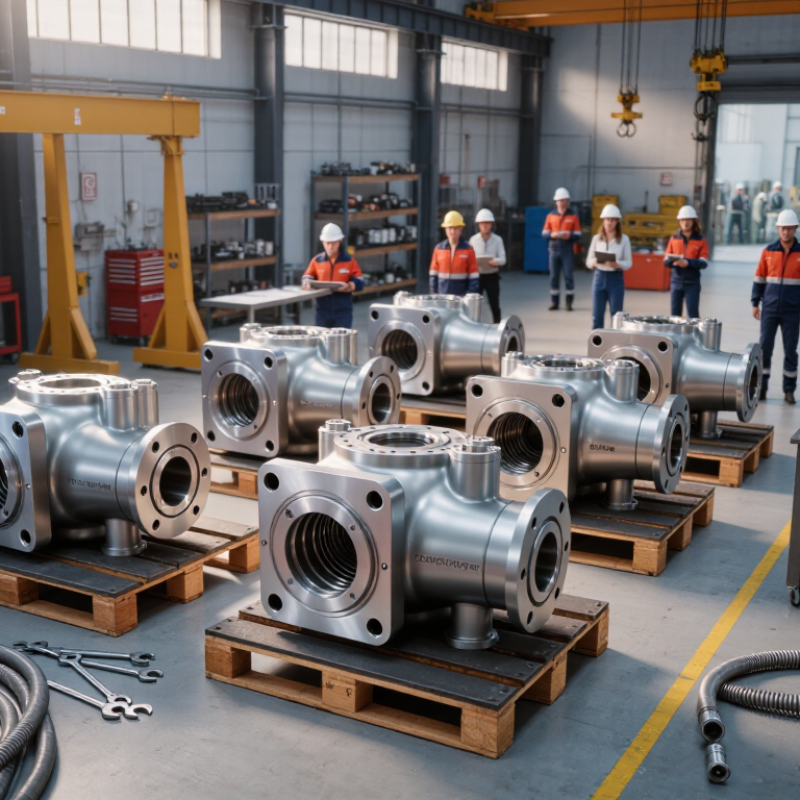
A fluid end module is the pressure-bearing section of a reciprocating mud pump. It contains liners, valves, seats, pistons, and discharge passages. These parts control how drilling fluid enters, compresses, and leaves the pump. Buyers often focus on pump horsepower. That is only part of the decision. The module’s pressure rating, material quality, and service access can determine actual operating reliability.
The International Energy Agency’s Oil 2024 report projects global oil demand will reach about 105.4 million barrels per day by 2030. More drilling activity can increase demand for dependable pressure equipment. API Specification 7K also sets requirements for drilling and well-servicing equipment. Therefore, buyers should verify pressure ratings, inspection records, fatigue resistance, and compatibility with the planned fluid. Small mismatches can create expensive downtime.
Field experience adds another lesson. A module may appear strong but still suffer from erosion around valve seats. Abrasive solids, poor fluid maintenance, and repeated pressure shocks accelerate wear. Easy replacement matters. Clear maintenance access matters more than glossy specifications. This is where global buyers should compare ten module options carefully, including sealing systems, spare-part availability, machining tolerance, and documented testing. A lower purchase price may seem attractive. It can become costly when replacement parts travel slowly or technical support is unclear. Specifications help, but operating history deserves equal attention.
Core designs determine how a fluid end survives pressure, abrasion, and repeated cycling. The ten common choices include triplex, quintuplex, forged, cartridge, linered, expendable, ceramic-lined, stainless-steel, duplex, and high-temperature modules. Each design normally includes a fluid cylinder, liner, piston, valves, seats, covers, studs, and seals. API Spec 7K remains a key reference for drilling equipment safety and pressure requirements.
Typical purchasing specifications range from 3,000 to 10,000 psi working pressure, with bore sizes often between 4 and 7 inches. Buyers should verify stroke length, pump speed, valve geometry, liner hardness, and connection dimensions.
Forged alloy bodies offer strong fatigue resistance. Stainless and duplex materials provide better corrosion protection in saline fluids. Ceramic-lined parts can reduce wear, but they may increase replacement cost. A higher rating is not automatically better.
The IEA’s Oil 2024 report projects global oil demand at 105.4 million barrels per day by 2030. OPEC’s World Oil Outlook 2024 projects approximately 116 million barrels per day by 2045. These different forecasts expose a planning risk for international buyers.
Long service life matters, but operating conditions matter more. Mud density, solids content, temperature, and maintenance quality can change actual performance sharply. I would still question any specification sheet without fatigue data, pressure-test records, and documented spare-part compatibility.
Top 10 Fluid End Modules by Application
Fluid end modules should match the working fluid, pressure cycle, and maintenance environment. For drilling mud, choose abrasion-resistant modules with replaceable liners. Fracturing requires high-pressure modules with strong valve seats and rapid inspection access. Cementing benefits from larger bores and corrosion-resistant wetted parts. Acidizing needs carefully selected alloys and reliable sealing systems. Water-injection service usually favors smooth internal passages and low leakage. Well-testing modules must tolerate pressure changes without damaging the valves. Chemical-dosing modules require accurate flow control and compatible elastomers. Desalination needs high-pressure modules designed for clean water and salt exposure. Mining slurry demands thick wear surfaces. Geothermal service needs materials that resist heat, scaling, and aggressive brine.
The applications reflect wider industrial demand. The International Energy Agency’s Oil 2024 report projects oil demand to reach 105.4 million barrels per day by 2030. That outlook supports continued investment in drilling, stimulation, and injection equipment. The United Nations’ World Water Development Report 2024 also highlights rising pressure on water systems, strengthening demand for high-pressure treatment modules. API 674 provides a useful reference for reciprocating positive-displacement pump design and testing.
Field selection is rarely perfect. A module suitable for clean water may fail quickly with sand, gas, or acidic fluid. Buyers should verify pressure ratings, fatigue life, spare-part availability, and local service capability. Small details matter. Temperature, solids concentration, and duty cycle can change the correct choice.
| Rank | Primary Application | Recommended Fluid End Module | Typical Pump Configuration | Common Wetted Materials | Typical Pressure Range | Typical Flow Range | Key Selection Considerations |
|---|---|---|---|---|---|---|---|
| 1 | Oil and gas well servicing | High-pressure reciprocating fluid end | Triplex or quintuplex plunger pump | Forged alloy steel, stainless steel, tungsten-carbide or ceramic liners | 5,000–15,000 psi | 100–1,500 gpm | Pressure rating, fatigue life, pulsation control, replaceable liners and field serviceability |
| 2 | Industrial high-pressure water jetting | Corrosion-resistant high-pressure fluid end | Triplex plunger pump | Stainless steel, duplex stainless steel, engineered sealing compounds | 3,000–40,000 psi | 2–120 gpm | Water quality, corrosion resistance, seal life, thermal management and nozzle compatibility |
| 3 | Reverse osmosis and desalination | Seawater-compatible high-pressure fluid end | Plunger or diaphragm-assisted high-pressure pump | Duplex or super-duplex stainless steel, ceramic plungers, elastomeric seals | 800–1,200 psi | 10–5,000 gpm | Chloride resistance, low leakage, energy efficiency, membrane pressure stability and water quality |
| 4 | Mining slurry and abrasive service | Heavy-duty abrasive-service fluid end | Diaphragm, piston-diaphragm or low-speed reciprocating pump | High-chrome alloy, rubber-lined steel, ceramic and abrasion-resistant elastomers | 150–1,500 psi | 20–5,000 gpm | Solids concentration, particle size, abrasion rate, replaceable wear parts and slurry viscosity |
| 5 | Chemical metering and process dosing | Chemical-resistant metering fluid end | Diaphragm or packed-plunger metering pump | PTFE, PVDF, polypropylene, ceramic and corrosion-resistant alloys | 50–10,000 psi | 0.001–500 gpm | Chemical compatibility, dosing accuracy, vapor handling, leak prevention and calibration stability |
| 6 | Food, beverage and hygienic processing | Sanitary stainless-steel fluid end | Sanitary diaphragm, piston or plunger pump | 316L stainless steel, polished surfaces, PTFE and FDA-compliant elastomers | 50–2,000 psi | 0.1–1,000 gpm | Clean-in-place capability, surface finish, hygienic connections, dead-space reduction and material compliance |
| 7 | Pulp, paper and coating systems | Viscous-fluid and coating-duty fluid end | Progressive-cavity, diaphragm or piston pump | Stainless steel, hardened alloy components, rubber stators and abrasion-resistant seals | 50–1,500 psi | 5–2,000 gpm | High viscosity, suspended solids, shear sensitivity, smooth flow and resistance to chemical additives |
| 8 | Power generation and boiler feed | High-temperature boiler-feed fluid end | Multistage centrifugal or reciprocating plunger pump | Carbon steel, stainless steel, alloy steel and high-temperature sealing materials | 500–4,500 psi | 50–10,000 gpm | Temperature, dissolved oxygen, thermal shock, cavitation margin and continuous-duty reliability |
| 9 | Hydraulic fracturing and stimulation | Ultra-high-pressure fracturing fluid end | Quintuplex or higher-plunger-count reciprocating pump | High-strength forged alloy steel, carbide-coated wear surfaces and high-pressure elastomers | 5,000–15,000 psi | 300–2,000 gpm | Cyclic fatigue, abrasive proppant, rapid maintenance, pressure pulsation and cooling requirements |
| 10 | Construction grouting and concrete pumping | Abrasion-resistant grout and concrete fluid end | Piston, diaphragm or dual-cylinder pump | Hardened steel, cast iron, polyurethane, rubber and carbide wear components | 500–5,000 psi | 5–300 gpm | Aggregate size, mix consistency, abrasion resistance, easy flushing and rapid wear-part replacement |
Note: Pressure and flow figures are typical application ranges. Actual selection depends on fluid properties, temperature, solids content, duty cycle, pump speed and applicable regional standards.
Material and standards determine whether a fluid end module performs beyond the test bench. The IEA Oil 2024 report projects global oil demand will reach 105.4 million barrels per day by 2030. That growth increases pressure on equipment reliability across different operating regions. Buyers should compare forged alloy steel, stainless steel, and corrosion-resistant overlays against actual mud chemistry, pressure cycles, and temperature. API 7K requirements can support drilling equipment evaluation, while NACE MR0175/ISO 15156 helps address sulfide-stress cracking in sour environments. Material certificates should follow EN 10204 Type 3.1, with traceable heat numbers and documented non-destructive testing.
Global compatibility also depends on dimensional control. Connection geometry, liner fit, valve-pocket design, and seal materials must match the complete pumping system. ISO 10423 or API 6A requirements may apply when modules interface with pressure-control equipment, but buyers should confirm the exact application. The NACE IMPACT study estimated annual corrosion costs at 2.5 trillion US dollars, equal to about 3.4% of global GDP. That figure makes cheap material substitutions difficult to justify. Still, standards do not remove every risk. A perfectly documented module can underperform when installation torque, flushing quality, or spare-part storage is neglected. Regional certification rules may also differ, so supplier declarations need independent technical review.
Top 10 Fluid End Modules for Global Buyers
Buyers compare fluid end modules by pressure rating, metallurgy, fatigue resistance, and service access. A module may look inexpensive, yet poor liner fit can increase vibration and downtime. API Spec 7K provides a useful reference for drilling and well-servicing equipment, but compliance alone does not prove long operating life. Ask for material certificates, pressure-test records, dimensional drawings, and previous field data. Small gaps matter.
Sourcing decisions now reflect a wider operating environment. The IEA Oil 2024 report projects global oil demand at about 104.7 million barrels per day in 2025. This supports continued equipment demand, but it also increases pressure on spare-part planning. Compare delivery times, repair kits, machining capacity, and technical support across regions. Confirm whether the supplier can maintain identical tolerances after repeated repairs. That detail is often overlooked.
Maintenance begins before installation. Record torque values, fluid type, operating pressure, and wash-cycle frequency. Inspect threaded connections and fluid passages during every planned shutdown. ISO 13534 offers guidance for inspection and repair of petroleum equipment, although it may not address every module design. Buyers should therefore combine standards with site experience. I have seen procurement teams focus heavily on purchase price and ignore cleaning access. That decision can become expensive. A practical comparison sheet should include lifecycle cost, not just the first invoice.
TERMS OF USE - LEDOLUX
This site uses cookies in order to deliver services in accordance with Privacy Policy. You can use settings within your browser to control the cookies that are set on your computer – conditions of access or storage of cookies.
Your data controller will be LEDOLUX POLAND SP. ul. Innowacyjna 1; 36-060 Głogów Małopolski, which adapts the content of its website to your needs and analyses and examines them to improve it. More information.