

China’s petroleum industry has built a strong manufacturing base for Petroleum Refining Catalysts. Local producers now supply catalysts for fluid catalytic cracking, hydroprocessing, reforming, and sulfur removal. Their products support refineries handling different crude qualities, operating pressures, and environmental requirements.
James G. Speight, a widely cited petroleum refining authority, wrote, “Catalysts are the workhorses of the petroleum refining industry.” This observation remains practical. In a refinery, catalyst performance can influence conversion, product yield, hydrogen consumption, pressure drop, and regeneration cycles. A small change in pore structure may affect how heavy molecules move through the catalyst bed. Operators notice these differences in reactor temperature, sulfur levels, and maintenance records.
This overview examines ten notable Chinese Petroleum Refining Catalysts manufacturers. It considers technical capability, product range, industrial experience, quality management, research investment, and export reach. Public information, published specifications, and application evidence should guide the comparison. Marketing claims alone are not enough.
The ranking is not absolute.
A catalyst that performs well in a high-sulfur refinery may not suit a lighter feedstock. Technical support also matters. Trial design, loading guidance, spent-catalyst analysis, and response time can determine commercial success. Some manufacturers disclose limited performance data, which makes evaluation imperfect. That limitation deserves attention.
Readers should verify current certifications, production capacity, testing methods, and regional compliance before selecting a supplier. The strongest manufacturers are not merely large producers. They combine consistent quality with measurable refinery results. This introduction provides a practical starting point for comparing China’s leading suppliers and understanding where each company may fit.
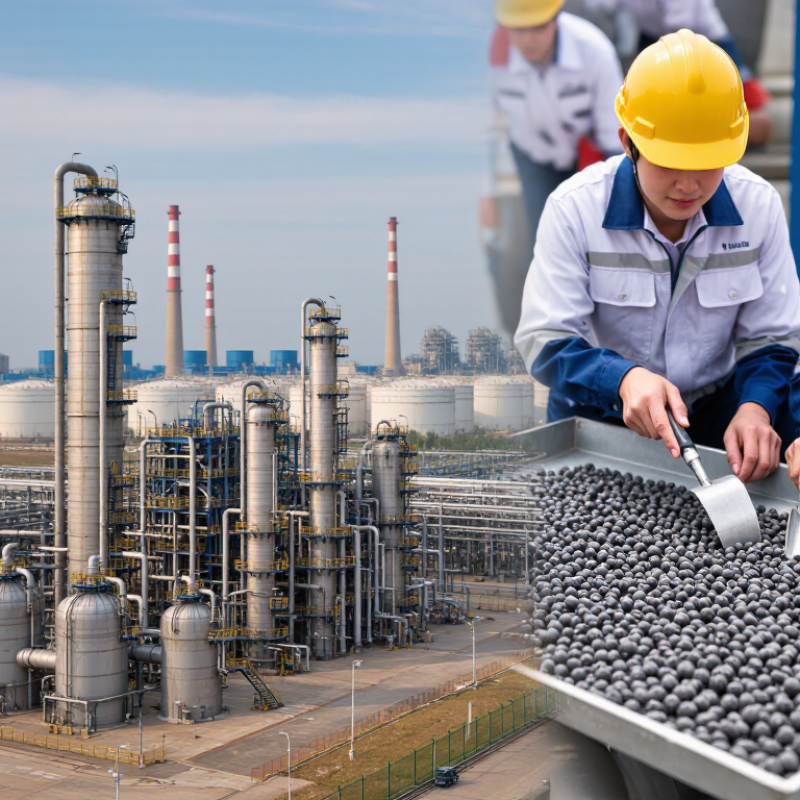
Petroleum refining catalysts are engineered materials that speed chemical reactions without being consumed in the final product. They help refineries convert crude oil into gasoline, diesel, jet fuel, and petrochemical feedstocks. Common systems include fluid catalytic cracking, hydrocracking, hydrotreating, and catalytic reforming.
The definition sounds simple. Plant reality is messier. Catalyst performance depends on feedstock metals, sulfur, nitrogen, temperature, pressure, and operating time. In practical work, engineers monitor reactor temperature, pressure drop, product quality, and catalyst activity. A small change in feed contamination can increase coke formation or shorten a catalyst cycle.
The International Energy Agency’s Oil 2024 report projects global oil demand will reach about 105.4 million barrels per day by 2030. This outlook increases pressure to recover more valuable products from each barrel. The U.S. Energy Information Administration also identifies refinery upgrading and cleaner fuel production as important industry trends. Hydrotreating catalysts remove sulfur compounds and support compliance with strict fuel specifications. FCC catalysts break heavy molecules into lighter products, while hydrocracking combines hydrogen and high pressure to produce cleaner middle distillates.
Catalysts are not magic. They cannot correct poor feed preparation or unstable operation. Their real value comes from matching formulation, reactor design, regeneration practice, and monitoring data. Industry reports provide useful benchmarks, but site conditions still decide performance.
China’s top petroleum refining catalyst manufacturers should be evaluated through evidence, not publicity. A credible assessment starts with catalyst performance in real refinery conditions. Key indicators include conversion rate, product selectivity, sulfur removal, and resistance to nickel and vanadium. Laboratory results matter, but plant data matters more.
Technical teams should examine pilot trials, operating temperature, pressure, feedstock quality, and catalyst replacement intervals. A catalyst handling heavy feed may perform differently with lighter crude. Energy use is another practical measure. Small temperature changes can influence yearly operating costs. Consistent particle strength also matters, because damaged pellets can increase pressure drop and reduce reactor efficiency. Safety records, quality controls, and production traceability strengthen confidence.
Cost evaluation should include the full catalyst lifecycle, not only the purchase price. Regeneration options, waste management, technical support, and delivery reliability can change the final value. Manufacturers with experienced engineers should explain both strengths and limitations clearly. That builds trust.
No ranking is perfect. Public information can be incomplete, and some performance figures may lack independent verification. Buyers should request comparable test conditions, recent certificates, and customer references. Site visits can reveal practical details, such as storage discipline, laboratory testing, and batch consistency. These details often matter more than polished claims.
China’s Top 10 Petroleum Refining Catalyst Manufacturers
China’s top ten petroleum refining catalyst manufacturers are best assessed through technical capability, production consistency, and field performance. A simple sales ranking can mislead. Public data is often uneven. Some manufacturers specialize in fluid catalytic cracking catalysts, while others focus on hydroprocessing, catalytic reforming, or sulfur recovery materials.
Experienced buyers examine catalyst activity, selectivity, pore structure, attrition resistance, and regeneration behavior. In an FCC unit, particle strength matters because constant circulation can create fines. Hydroprocessing catalysts require stable active metals and carefully controlled alumina supports. Testing should include pilot-scale trials, feedstock simulations, and analysis of sulfur, nitrogen, and metal tolerance.
Strong manufacturers usually maintain traceable raw-material systems, controlled calcination, and repeatable quality inspection. They may also provide technical support during loading, activation, and performance monitoring. Site experience matters. A catalyst that performs well with light feedstock may struggle with heavier residues. That difference is easy to overlook.
The top ten should therefore be compared by application fit, independent test records, delivery reliability, and process safety practices. Certification can support credibility, but it cannot replace operating evidence. Some published performance claims may need closer verification. Buyers should request batch data, technical references, and clear replacement plans before making a decision. Real refinery conditions are rarely as tidy as laboratory results.
| Rank | Manufacturer Profile | Core Catalyst Families | Typical Refinery Applications | Common Active Components | Typical Catalyst Form | Key Evaluation Criteria |
|---|---|---|---|---|---|---|
| 1 | China-based integrated catalyst manufacturer | Fluid catalytic cracking catalysts | FCC riser reactors and regenerator systems | Zeolite Y, matrix alumina, silica–alumina | Microspherical particles | Activity, selectivity, attrition resistance, metals tolerance |
| 2 | China-based hydrotreating catalyst specialist | Hydrodesulfurization and hydrodenitrogenation catalysts | Diesel, naphtha, kerosene and gas-oil hydrotreating | Nickel–molybdenum or cobalt–molybdenum sulfides | Extrudates on porous alumina | Sulfur removal, hydrogen consumption, cycle length |
| 3 | China-based hydrocracking catalyst manufacturer | Hydrocracking and hydroconversion catalysts | Vacuum gas oil, lubricant base oil and middle-distillate production | Nickel–tungsten, nickel–molybdenum and acidic zeolites | Cylindrical or trilobe extrudates | Conversion, product distribution, stability, cracking selectivity |
| 4 | China-based catalytic reforming supplier | Naphtha reforming catalysts | High-octane gasoline and aromatics production | Platinum with rhenium or other promoter metals on alumina | Spherical or extruded catalyst particles | Octane uplift, hydrogen yield, coke resistance, regeneration performance |
| 5 | China-based residue-conversion catalyst manufacturer | Residue hydrotreating and hydrodemetallization catalysts | Atmospheric residue and vacuum residue upgrading | Nickel–molybdenum or cobalt–molybdenum on high-pore-volume alumina | Large-pore extrudates and graded-bed shapes | Metal removal, Conradson carbon tolerance, pore accessibility |
| 6 | China-based isomerization catalyst supplier | Light naphtha isomerization catalysts | C5/C6 octane enhancement and benzene reduction | Platinum on chlorided alumina or hydrogen-form zeolites | Extrudates or formed pellets | Octane improvement, moisture tolerance, chloride management |
| 7 | China-based sulfur-recovery catalyst manufacturer | Claus sulfur-recovery catalysts | Sulfur recovery units and tail-gas treatment systems | Activated alumina, titania and specialty mixed oxides | Pellets, spheres or shaped extrudates | Sulfur conversion, hydrolysis activity, thermal stability |
| 8 | China-based tail-gas treatment catalyst supplier | Selective hydrogenation and tail-gas cleanup catalysts | Sulfur plant tail-gas treatment and emissions control | Cobalt–molybdenum, nickel–molybdenum and alumina-supported systems | Fixed-bed extrudates | Conversion efficiency, sulfur selectivity, pressure-drop control |
| 9 | China-based dewaxing catalyst manufacturer | Catalytic dewaxing and hydroisomerization catalysts | Diesel cold-flow improvement and lubricant base-oil production | Zeolites or molecular sieves with noble-metal or base-metal functions | Extruded fixed-bed catalyst | Pour-point reduction, yield retention, selectivity and lifetime |
| 10 | China-based specialty refinery catalyst manufacturer | Custom and process-specific catalyst formulations | Debottlenecking, feedstock adaptation and unit revamps | Zeolites, alumina, silica–alumina and supported transition metals | Pellets, extrudates, spheres or microspheres | Feed flexibility, mechanical strength, regeneration and lifecycle cost |
Note: Company names and brand information are intentionally omitted. The table summarizes established petroleum-refining catalyst categories, materials and application criteria used in China’s refining industry.
China Top 10 Petroleum Refining Catalysts Manufacturers
China’s leading catalyst manufacturers focus on high-value products for fluid catalytic cracking, hydrotreating, hydrocracking, and catalytic reforming. Their FCC portfolios commonly include zeolite-based catalysts, residue-upgrading catalysts, sulfur-reduction additives, and metal-passivation materials. Hydrotreating lines often use nickel-molybdenum or cobalt-molybdenum formulations on alumina supports. These products target cleaner fuels, stable conversion, and longer catalyst cycles.
Technology matters as much as product type. Leading producers invest in microsphere shaping, pore-structure control, rare-earth adjustment, and catalyst regeneration. Some facilities also use digital models to track reactor temperature, pressure drop, coke yield, and contaminant loading. The International Energy Agency’s Oil 2024 report identified China as a major contributor to global oil-demand growth in 2023. OPEC’s Annual Statistical Bulletin 2024 placed Chinese refinery capacity at roughly 18 million barrels per day. That scale increases demand for catalysts that tolerate heavier feedstocks.
Feedstock quality changes quickly. So should the catalyst.
Independent buyers should examine activity retention, attrition resistance, metals tolerance, and performance in commercial trials. Laboratory surface area alone can mislead. Public reporting is uneven, and some performance claims lack comparable test conditions. That is a weakness. A reliable evaluation should compare yield, hydrogen consumption, emissions control, and replacement frequency under similar operating conditions. The best supplier is not always the one offering the highest initial activity. Fitness for the specific refinery usually matters more.
Choosing among China’s top petroleum refining catalyst manufacturers requires more than a ranking. OPEC’s World Oil Outlook 2024 reports global refining capacity reached about 103.9 million barrels per day in 2023. This expansion increases pressure on catalyst performance, supply stability, and operating cost.
Start with the process fit. Ask for pilot or commercial data on conversion, selectivity, metals tolerance, attrition, and regeneration performance. For FCC catalysts, compare pore volume, surface area, particle strength, and activity under your feedstock conditions.
A lower purchase price can become expensive when catalyst replacement rises. It happens.
Supplier evaluation should include ISO-certified quality systems, batch traceability, laboratory records, and clear certificates of analysis. Request at least three recent production batches, not one polished sample. Check delivery history, technical response time, and emergency inventory in China. The IEA’s Oil 2024 report highlights continuing changes in refining capacity and product demand, so flexible technical support matters.
Independent testing is useful. Compare samples under identical feed, temperature, catalyst-to-oil ratio, and regeneration conditions. Review the test method carefully; inconsistent conditions can create impressive but unreliable results. OPEC data also shows refining remains a large, competitive industry, making long-term supply resilience important. A factory visit can reveal practical details, including powder handling, packaging quality, and contamination controls. Top-ten lists are convenient. They are not due diligence.
TERMS OF USE - LEDOLUX
This site uses cookies in order to deliver services in accordance with Privacy Policy. You can use settings within your browser to control the cookies that are set on your computer – conditions of access or storage of cookies.
Your data controller will be LEDOLUX POLAND SP. ul. Innowacyjna 1; 36-060 Głogów Małopolski, which adapts the content of its website to your needs and analyses and examines them to improve it. More information.