

2026 Top LED Street Light Types for Global Buyers
The 2026 Top LED Street Light Types for Global Buyers guide examines practical choices for roads, highways, campuses, ports, and public spaces. It compares traditional cobra-head fixtures, modern shoebox designs, modular LED systems, solar-integrated units, and smart adaptive lighting. Each type serves a different environment.
James R. Brodrick, a solid-state lighting expert associated with the U.S. Department of Energy, stated, “LEDs are not a light source; they are a lighting system.” This principle remains important for every Led Street Light purchase. Buyers should assess the complete system, not only the advertised wattage.
A reliable evaluation includes photometric files, beam distribution, efficacy, color temperature, color rendering, surge protection, thermal management, and IP and IK ratings. Installation height matters. So does road width. A narrow street may need a controlled asymmetric beam, while a highway requires stronger uniformity and longer optical reach.
Field experience also reveals uncomfortable gaps. Some datasheets omit performance at high ambient temperatures. Some warranties sound impressive but exclude drivers, controls, or lumen depreciation. Claimed energy savings can also fail when dimming schedules are poorly configured.
The best Led Street Light is rarely the most expensive model. It is the fixture matched to local weather, traffic patterns, maintenance skills, grid conditions, and safety requirements. Buyers should request independent test reports and verify compliance with applicable regional standards. Small details matter. A loose photocell, blocked vent, or weak connector can shorten service life.
This guide therefore focuses on evidence, realistic operating conditions, and long-term value. It also recognizes that no universal specification fits every market. Good decisions require comparison, site data, and occasional reconsideration.
LED Street Light Basics and Key Classification Standards
2026 Top LED Street Light Types for Global Buyers
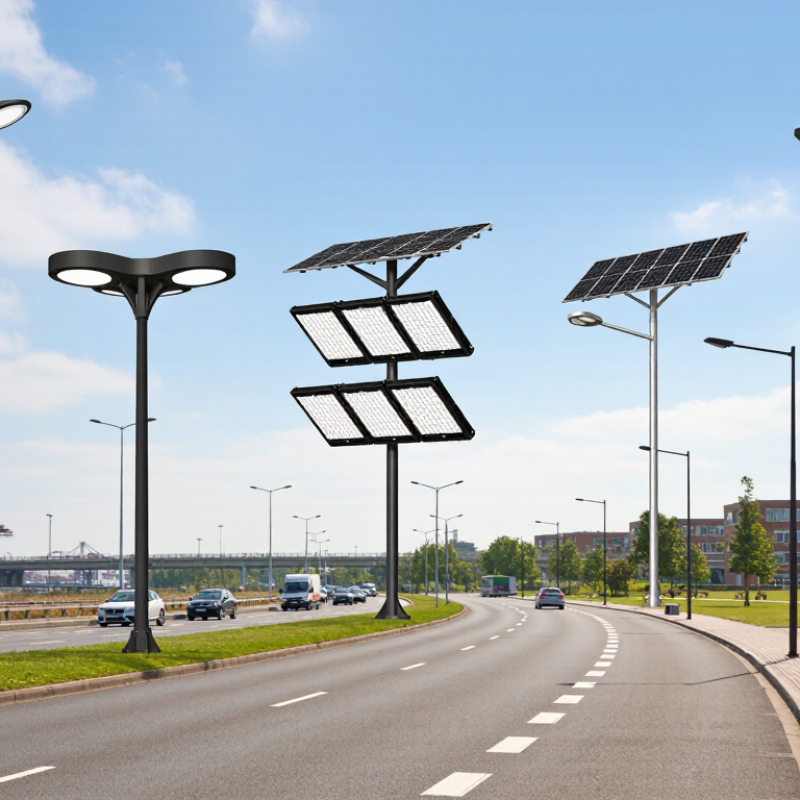
LED street lights are classified by application, optics, mounting, and control method. Roadway luminaires serve highways, urban streets, residential lanes, and pedestrian areas. Their optical distribution may be Type I, II, III, or IV under common IES practice. European projects often reference EN 13201, while CIE 115 supports lighting-class selection. IEC 60598-2-3 covers safety requirements for road and street luminaires. These standards address different needs, so one label cannot replace a project-specific calculation.
Energy performance remains important. The International Energy Agency reports that lighting uses about 15% of global electricity. The U.S. Department of Energy states that LEDs can use at least 75% less energy than incandescent lighting and last much longer. However, street-light comparisons can mislead. Wattage alone ignores optical efficiency, maintenance factors, glare, and dimming schedules. A 100-watt fixture is not automatically better than an 80-watt model.
Tips: Check delivered lumens, not only rated lumens. Confirm IP66 protection, IK impact resistance, surge protection, and operating temperature. Request an LM-79 photometric report and LM-80 data for LED packages when available. Match correlated color temperature to the location; cooler light is not always safer. Adaptive controls can reduce late-night consumption, but poor settings may create dark transitions. Field experience shows that pole spacing and tree growth often defeat a perfect catalog design. That detail deserves honest review.
2026 Top LED Street Light Types for Global Buyers - LED Street Light Basics and Key Classification Standards
A practical comparison of common LED street-light configurations, performance parameters, installation conditions, and international classification references.
| LED Street Light Type | Typical Application | Typical Input Power | Typical Luminous Efficacy | Common CCT Options | Optical Distribution | Mounting and Structure | Key Selection Considerations | Relevant Classification or Standard References |
|---|---|---|---|---|---|---|---|---|
| Traditional Cobrahead Replacement | Urban roads, suburban streets, collector roads, and roadway retrofit projects replacing older HID fixtures. | 30–180 W | 120–180 lm/W at luminaire level | 2,700 K, 3,000 K, 4,000 K, 5,000 K | Type II, Type III, Type IV, or Type V distributions selected according to road width, pole spacing, and setback. | Slip-fitter or adjustable tenon mount; commonly used on existing horizontal or vertical arms. | Verify mounting diameter, tilt angle, photometric file, pole spacing, glare control, and compatibility with existing wiring. | IEC 60598-2-3 for road and street-lighting luminaires; IES roadway distribution classifications; IP and IK ratings according to site conditions. |
| Modular LED Street Light | Major roads, highways, high-output urban corridors, and projects requiring serviceable or replaceable optical modules. | 100–300 W | 130–190 lm/W at luminaire level | 3,000 K, 4,000 K, 5,000 K | Multiple interchangeable optics, including narrow, medium, wide, and asymmetric roadway distributions. | Multi-module housing with a substantial heat sink; slip-fitter, direct-arm, or adjustable mounting options. | Check thermal management, module uniformity, driver compartment access, surge protection, and long-term spare-part availability. | IEC 60598-1 and IEC 60598-2-3; IEC 62471 photobiological safety assessment; LM-79 and LM-80 methods may support performance verification. |
| Compact All-in-One Street Light | Residential streets, low-speed roads, parking areas, campuses, walkways, and smaller municipal installations. | 20–100 W | 110–170 lm/W at luminaire level | 2,700 K, 3,000 K, 4,000 K | Usually Type II, Type III, or broad asymmetric distribution for short-to-medium pole spacing. | Integrated LED board, driver, heat sink, and housing; suitable for wall, bracket, or small-arm mounting. | Prioritize compact dimensions, low wind load, thermal performance, maintenance access, and appropriate mounting adjustment. | IEC 60598-2-3; ingress protection commonly selected at IP65 or higher for outdoor exposure; IK08 or higher is often considered for public areas. |
| Decorative Urban Street Light | Historic districts, city centers, public squares, pedestrian streets, parks, and architectural streetscapes. | 20–120 W | 90–150 lm/W at luminaire level | 2,200 K, 2,700 K, 3,000 K, 4,000 K | Symmetric or asymmetric distribution, often with controlled upward light and reduced spill into adjacent properties. | Lantern, post-top, pendant, or bracket-mounted housing; appearance and mechanical compatibility are important. | Evaluate visual comfort, historic-design requirements, glare, upward light, color rendering, corrosion resistance, and maintenance access. | IEC 60598-2-3; local outdoor-lighting, heritage-area, skyglow, and light-trespass requirements may also apply. |
| Solar LED Street Light | Remote roads, rural paths, parks, off-grid locations, emergency routes, and areas with limited grid access. | 20–150 W LED load | 100–180 lm/W at luminaire level | 2,700 K, 3,000 K, 4,000 K, 5,000 K | Roadway asymmetric optics; performance depends on dimming schedules, battery capacity, and available solar energy. | Solar panel, charge controller, battery, LED luminaire, and pole-mounted or remotely mounted energy-storage system. | Size the system for solar resource, autonomy days, winter conditions, battery temperature, panel shading, and maintenance access. | IEC 60598-2-3 for the luminaire; IEC 61215 and IEC 61730 are commonly referenced for photovoltaic modules; battery safety requirements depend on battery chemistry and jurisdiction. |
| Smart-Controlled LED Street Light | Smart-city networks, adaptive roadway lighting, energy-monitoring programs, and large municipal control systems. | 30–250 W | 120–190 lm/W at luminaire level | 2,700 K, 3,000 K, 4,000 K, 5,000 K | Roadway optics combined with scheduled dimming, occupancy response, traffic-based control, or centralized management. | Standard roadway housing with NEMA-style receptacle, Zhaga-style interface, wired control, wireless node, or gateway connection. | Confirm control protocol, cybersecurity, interoperability, network coverage, fail-safe operation, data ownership, and manual override. | IEC 60598-2-3; DALI-2 or other control protocols may be specified; NEMA-style and Zhaga-style interfaces are physical/interface options rather than universal performance standards. |
| High-Mast LED Lighting | Interchanges, ports, airports, logistics yards, industrial sites, large parking areas, and wide-area outdoor facilities. | 200–1,000 W per luminaire | 120–180 lm/W at luminaire level | 3,000 K, 4,000 K, 5,000 K | Narrow, medium, or flood distributions designed for high mounting heights and broad-area coverage. | Multiple floodlight-style luminaires installed on a high mast or lowering-ring system; wind loading is a major design factor. | Assess aiming, spill light, mast structure, wind load, glare, maintenance method, access equipment, and uniformity across the target area. | IEC 60598-2-5 may apply to floodlight-type luminaires; IEC 60598-1, structural design codes, and local sports or aviation requirements may also be relevant. |
| Tunnel and Underpass LED Luminaire | Road tunnels, underpasses, portals, approach zones, and areas requiring continuous operation in harsh environments. | 50–300 W | 110–170 lm/W at luminaire level | 3,000 K, 4,000 K, 5,000 K | Symmetric or longitudinal asymmetric optics; high uniformity and controlled glare are essential. | Ceiling, wall, or bracket mounting with robust sealed housing and corrosion-resistant components. | Consider luminance requirements, tunnel-zone transitions, ventilation, cleaning, humidity, salt exposure, emergency operation, and maintenance strategy. | IEC 60598-2-3 may be relevant for road-lighting applications; tunnel design and safety requirements are also governed by local transport regulations and project specifications. |
| Pedestrian and Cycle-Path LED Light | Sidewalks, cycleways, greenways, residential paths, campuses, parks, and low-speed public spaces. | 10–60 W | 90–160 lm/W at luminaire level | 2,200 K, 2,700 K, 3,000 K, 4,000 K | Wide asymmetric or short-throw distributions designed for pedestrian-scale mounting heights. | Low-height post-top, bollard, bracket, or wall-mounted configurations, typically installed at 3–8 m mounting heights. | Focus on pedestrian visual comfort, uniformity, low glare, low spill light, vandal resistance, and reduced environmental impact. | IEC 60598-2-3 where applicable; EN 13201 or equivalent national roadway-lighting requirements may be used for road and path lighting design. |
Buyer note: Actual wattage, luminous efficacy, spacing, illuminance, luminance, uniformity, and glare performance must be confirmed through a project-specific photometric calculation. IP and IK ratings, CCT, driver options, surge protection, and control interfaces should be specified according to the installation environment and applicable local regulations.
Related Posts
-

Discovering Quality Suppliers for the Best Lighting Fixtures in Global Markets
-
Understanding Industry Production Standards for the Best LED Luminaires: A Comprehensive Guide
-
Discover the Benefits of Upgrading to a Smart Led Lighting System for Your Home
-
The Ultimate Checklist for Sourcing the Best LED Products Worldwide
-
How to Choose Quality Lighting for Your Home or Business?
-

Top Lighting Installations Trends to Know in 2026?